

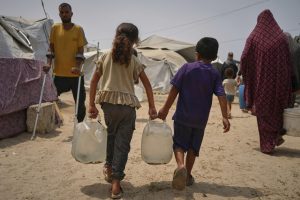




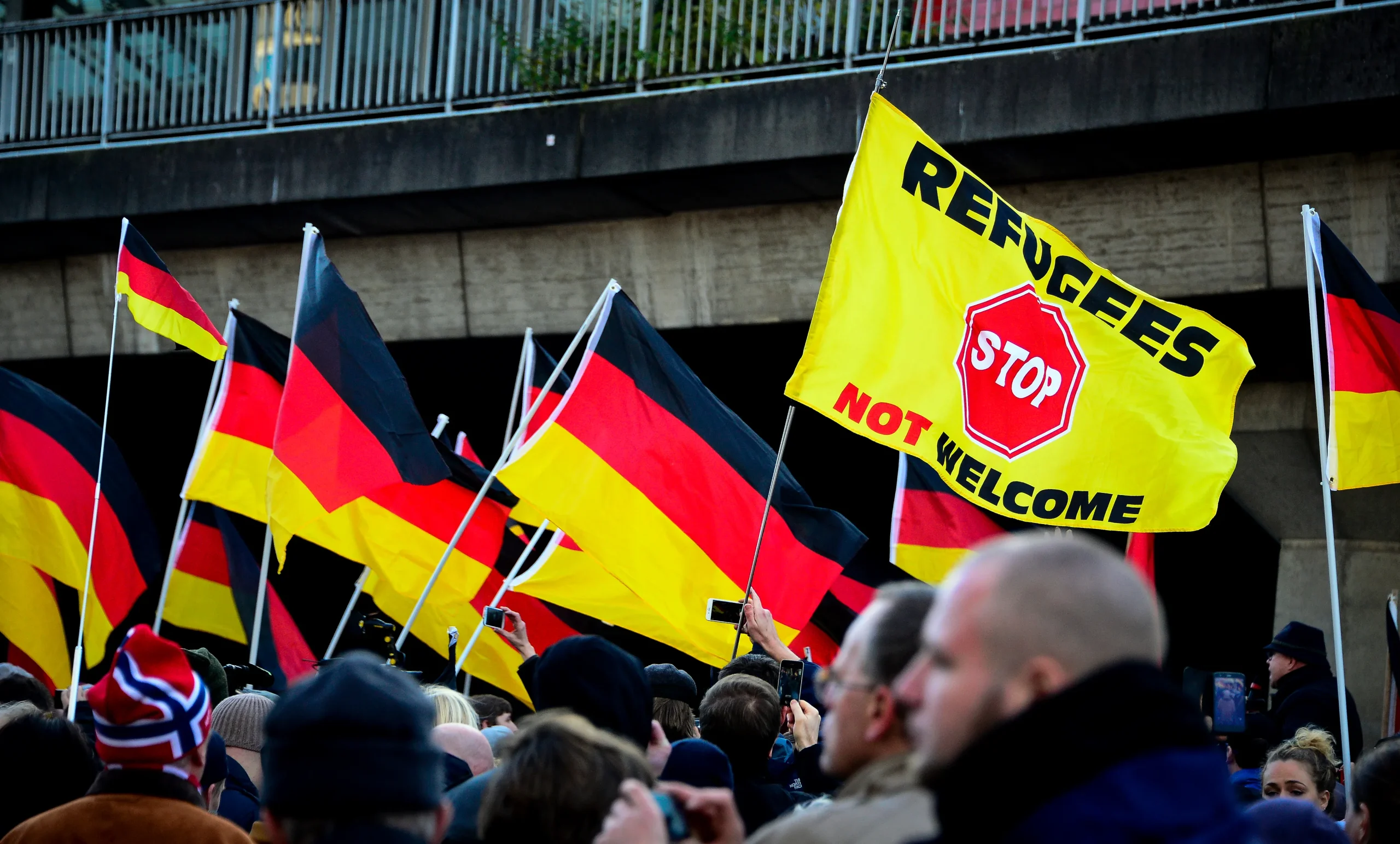

Europe is witnessing an intensive wave of a widespread anti-immigration rhetoric, not only across Eastern Europe but also in the Western bloc, including Germany. In the aftermath of the migration influx in 2015 (which is referred to as the European migration crisis), the EU, including Norway and Switzerland, received an overwhelming number of migrants and asylum seekers. According to Pew Research Center, around 1.3 million migrants, mainly from the Global South, sought asylum.[i] These migrants were fleeing their countries of origins for reasons related to political conflicts, turmoil[ii] and fear of persecution. They embarked on deadly journeys whether through the sea or the land passing by Turkey and Albania.[iii]
This high record of migrants coming into Europe, which was observed for the first time, provoked different political stances from across the European countries, especially that the number of asylum applications were not equally distributed among the EU states. As for Germany, it processed about 442,000 asylum applications in 2015 alone, making it the largest EU state to receive asylum applications.[iv]
After being among the first responders to the refugee crisis in 2015, Germany’s migration policy has started to witness a series of shifts since then. This change in migration discourse is supported by different political factors and actors, whose contribution to the rhetoric can be explained through multiple lenses.
This article will tackle Germany’s policy shifts in the migration agenda, starting with Angela Merkel until the current government. The article will start by discussing the different implemented migration policies during Merkel, followed by Olaf Scholz and then the current government headed by Friedrich Merz. Next, it will state some of the factors that could explain the reasons behind the shift in the migration policies. And it will conclude by mentioning the possible implications of such shifts on both the political and social contexts.
First: The Implementation of different migration policies
- Angela Merkel’s Administration
Angela Merkel is the first female chancellor to lead the German government between 2005 and 2021, who used to be the leader of the center-right Christian Democratic Union (CDU). She headed a coalition between the Christian Democratic Union (CDU), the Christian Social Union (CSU) and the Social Democratic Party (SPD).[v]
When it comes to Merkel’s migration agenda, different phases depending on the domestic and international contexts can be highlighted. The first phase became evident with the migration crisis in 2015, when Merkel embraced an “open-door” policy agenda resulting in receiving more than one million refugees between 2015 and 2016, mainly from Syria, Iraq[vi] and Afghanistan who managed to enter Western Europe from Turkey, Greece and the Balkans.[vii]
At this stage, Merkel’s policy did not face a strong opposition whether from the public or policy-makers and business elites in the society. This could be seen as a kind of solidarity with migrants, derived by moral and humanitarian obligations towards individuals encountering serious challenges.[viii]
However, the only resistance came from the conservative party the Christian Social Union (CSU), who saw the recipient of these large numbers of refugees as critical to the cultural cohesion and the demography of the German society. In addition, for the CSU, this raised the fear of having a potential surge in the rate of terrorist attacks, where some of those refugees admitted to the country could have belonged to terrorist militias.[ix] During that period, the far-right wing did not have much political power to influence key national policies.[x]
In August 2015, Merkel decided to grant entrance to many Syrian refugees and allowed them to register their asylum on the German territory, even after being already registered in different areas across the EU. As a result, the EU law that obligates asylum seekers to return to the first country in the European Union through which they entered was temporarily halted.[xi]
In addition, Merkel moved to ease the border restrictions with Austria, thus granting access to tens of thousands of refugees awaiting relocation. Such easing of restrictions led Germany to be among the first EU states to receive the highest number of asylum applications, reaching over 1.4 million applications.[xii] This welcoming gesture was met with a huge mobilizing effort, where the government hired thousand volunteers, transformed shelters into permanent homes and provided training to specialist teachers.[xiii]
However, this welcoming policy was short-lived (only from September to October 2015) and new restrictions were implemented since October 2015. Due to reasons related to the social security, financial crisis and the inflow of refugees, clear signs of resistance from the public against the welcoming policy were observed.[xiv]
As a result, Merkel took a different political stance compared to the previous one. In this phase, the government reinstated border checks with Austria, only nine days after the move to ease the border crossing with its Austrian neighbor was maintained. The German police started to implement this new measure through enforcing control at road check points with Austria.
In 2017, it was reported that more than 7,000 migrants were not allowed entrance to the German territory, where around 90% of them were blocked at the Austrian border. Also, there was a huge decline in the number of those applying for asylum, from about 722,000 asylum seekers in 2016 to around 198,000 in 2017.
Another significant shift in the migration policy was evident among the Syrian refugees. At first, the majority were granted full refugee status, which made it easier for them to apply for family reunification. However, in early 2016, many of them received only a temporary protection valid for one year. In addition, the German parliament halted the right to family reunification for those who are not officially recognized as refugees[xv] (refugees with subsidiary status[xvi]).
A further restrictive measure was imposed on failed Afghan asylum seekers who were forced to leave Germany and were sent back to Afghanistan despite the destabilizing situation that the country was facing during that period. Moreover, a new law was enacted that exchanged cash assistance with vouchers for asylum seekers living in reception centers.[xvii]
In order to place more limits on the main routes that refugees normally take to enter Europe, Merkel pushed for the EU-Turkey agreement in 2016, aimed at restraining the influx of migrants at the Greek border, in addition to advocating for other deals with African countries that would help in regulating the migration flow.[xviii] Nevertheless, the Upper house of the German parliament “known as Bundesrat” opposed the government’s plan to reduce the number of asylum applications from North African countries (Morrocco, Algeria and Tunisia), which were added by the government to the safe countries list.[xix] Such governmental plan did not secure a parliamentary majority and was heavily rejected by the Greens due to concerns related to the coercive measures towards political dissidents.[xx]
Merkel’s policy was criticized from both the far-right AFD party (Alternative for Germany) and the Left. First, the AFD accused Merkel for being responsible for the instability caused by the terror attacks that the country had witnessed especially after the Berlin attack in December 2016. On the other hand, the leader of the Social Democratic Party (SPD), Martin Schulz, attacked Merkel’s decision regarding the enlargement of the deportation policy, especially to Afghanistan and the restrictions imposed on wearing the burqa. An additional division within her coalition was evident when Horst Seehofer, the head of the Christian Social Union (CSU), denounced her way of handling the migration crisis.[xxi]
It can be said that Merkel’s famous welcoming phrase “Wir Schaffen das”, or “we can do this” started a never-ending debate during her mandate. At first, the open-door policy was accepted by the public and different politicians. However, when the situation became uncontrollable, many citizens and decision-makers went against such policy. This led to a rise in the anti-migration rhetoric from different parties, particularly the far-right who started to gain an unprecedent popularity after the migration crisis in 2015. At this point, Merkel seemed under a massive pressure to shift her policies towards a tougher direction and started to maintain policies that secured national interests.
- Olaf Scholz Administration
Moving to Olaf Scholz, who became the head of the government from 2021 until 2025, he was the finance minister, and the vice chancellor in Merkel’s government and also a member of the center-left Social Democratic Party (SPD). Scholz’s coalition government consisted of the Social Democrats (SPD), liberal Free Democrats (FDP) and the Greens.[xxii]
When Scholz took office, his government took a slightly different approach compared to his predecessor Angela Merkel. The aim of his policy was to put an end to the influx of irregular migrants and at the same time to attract more regular migrants coming to Germany. This policy was enforced through different legislative measures, including regulation procedures for those holding an irregular status, reformation of the German citizenship and creation of job opportunities for those who have a legal status.[xxiii]
Regarding the reform to the German citizenship, Scholz administration sought to ease the naturalization process, by lessening the residence permit requirements to six years (down from eight years) for those who apply for an integration course, while individuals with fluent language skills in German can acquire it after five years (down from six years).
However, those reforms sparked a backlash whether from the Conservative Christian Democratic Union (CDU) who criticized Scholz’s policy that, according to them, paid less attention to the integration process. Also, the biggest opposition came from the far-right party the AFD (Alternative for Germany) who were certainly against such decision.[xxiv]
Nevertheless, Scholz’s migration policy shifted gradually towards a stricter direction. This became evident when the former Chancellor decided to take a tougher stance on migration through imposing temporary control on all the national borders. These measures impacted for instance immigrants from Afghanistan, when the government extradited 28 Afghani citizens to their home country, charged with criminal offenses.[xxv] However, Scholz’s coalition government did not align with his deportation policies, especially from the Green and the Left parties, who considered such approach as a serious one, promoting xenophobic and anti-immigration narratives.[xxvi]
Another major change came with the fall of Bashar Al-Assad regime in December 2024, where many politicians urged Syrians to go back to Syria. Even Scholz’s government was one of the first responders, declaring an immediate halt in processing asylum applications. This widespread sentiment towards the newly unexpected event in Syria was common among the political spectrum, especially with the Conservative hardliners and far-right party members. Only the Green and the Left parties expressed their opposition against such political decision.[xxvii] The approximately one million Syrian who are actual holders of German passports seemed to be not welcomed compared to before, despite their highly demonstrated skills and well- integrated potentials.[xxviii]
Moreover, Scholz’s migration policy approach was questioned once again when he collaborated with major migrant countries of origin to deport refugees who did not need protection.[xxix] For instance, according to some media reports, the real intentions behind Scholz’s visit to Nigeria in October 2023 were not only to strengthen the bilateral cooperation between the two countries in the economic sector, but also to reach a mutual agreement on the migration issue. The former chancellor asked his Nigerian counterpart to accept their refugees whose asylum requests were rejected in Germany.[xxx]
On the other hand, Ukrainian migrants fleeing the Russian Ukrainian war in 2022 were not subjected to the same policy approach, where it seemed that they were highly welcomed from Germany and the EU. Different policies were implemented upon their arrival in contrast to the ones imposed on refugees from outside the EU. Upon their entry to Germany, Ukrainians were offered quick protection and residence permits that secured entry to job opportunities, social benefits and free movement across the European continent.[xxxi]
- Friedrich Merz and his current government
When Merz won the elections earlier in 2025, he emphasized that “Germany is a country of immigration” which meant that the government should adopt migration policy measures aimed at advancing the state’s national interests. In other words, this could be translated into further restrictions, higher rate of refusals, stricter regulations and increased forced returns. [xxxii] Friedrich Merz was the head of the Christian Democratic Union (CDU). His coalition government consists of his party the Christian Democratic Union (CDU) and its Bavarian sister party, the Christian Social Union (CSU) and the Social Democrats (SPD).[xxxiii]
Merz’s migration approach diverted significantly from that of Merkel and exhibited slight dissimilarity between his policy and that of Scholz. Merz’s policy measures were translated into more controls at national border, banning the entrance of asylum seekers at borders, halting family reunification, and voluntary admission programs.[xxxiv] In addition, he shifted away from what the former government had implemented regarding the naturalization process, where he proposed to put an end to the citizenship law reforms. Now acquiring the German citizenship would be after five years of effective integration, as opposed to the three years set by the Scholz government.[xxxv] This anti-migration rhetoric signals a significant change to the country’s immigration policy agenda adopted by the new government.
Merz asserted that the government would prioritize the internal legislative system in managing the migration policies over the EU law. His dissatisfaction with the influx of immigrants to the country prompted him to even suggest granting the federal police the authority to detain those individuals awaiting deportation until their expulsion.[xxxvi]
When it comes to the significant success that the far -right party the AFD (Alternative for Germany) achieved in the 2025 elections, Merz saw that the growing support for the AFD party is only related to the migration issue and once this problem is under control, the party’s political power would fall.[xxxvii] It is worth mentioning that Germany’s traditional parties resist any form of collaboration with the AFD since it has been associated with extremism.[xxxviii] This linkage to extremism by the Federal Office for the Protection of the Constitution was based on the party’s ideological agenda that favors Islamophobic, and xenophobic sentiments, in addition to its Euro-critical stance.[xxxix] Even the general secretary of Merz’s party Tom Unger insisted on the fact that no cooperation should be sought with a party like the AFD.
However, Merz’s stance towards the AFD was questioned earlier this year by the Social Democrats and the Greens, before taking office as the new chancellor, when he introduced non-binding proposals to the parliament, implementing measures to push back irregular migrants, including asylum seekers, at the border. And in order for his proposal to pass, he sought some support from the AFD[xl], apparently his policy proposal aligned with the AFD rhetoric, thus granting him the majority needed to pass a law for the first time.
Opponents to Merz’s proposal (Social Democrats, including Olaf Scholz, and the Greens), criticized him for not only trying to impose measures that go against both the German and EU law on refugees, but also for relying on the far-right’s support. Even Alice Weidel, the AFD party leader, seemed to be satisfied with Merz’s proposal. She stated that what Merz proposed perfectly aligned with her party’s agenda.[xli] One could say that Merz’s conservative policy agenda is shifting towards a more anti-immigration rhetoric, making it more appealing to the AFD, which could grant him further political gains.[xlii]
Also, in July 2025, it was the first time since Merz took office to allow for the forced return of 81 Afghan men to Afghanistan who were held criminally liable by the government.[xliii] Moving to the 8th of October 2025, where a new addition to the migration policies was imposed, where the German parliament halted the fast-track citizenship that was introduced during the previous administration of Olaf Scholz. The fast-track procedure allowed migrants to apply for the citizenship after three years of their residency in Germany, with the condition of showing highly advanced language skills in German, in addition to a proof of social inclusion in the society.
This new migration measure was expected from the current chancellor Merz who was committed to change many of the enacted migration laws by the previous administration. This new law was approved by the majority of the members of the parliament (450 members), especially among the largest opposition party the AFD far-right party, where such new policy totally aligned with their agenda.
However, the newly adopted policy was disapproved by 134 members of the parliament and other researcher working on migration who warned against the impact of this measure on the population. The introduction of this policy could potentially reduce Germany’s attractiveness to skilled labour, threatening the economic stability of the country.[xliv]
Moreover, recent anti-migration statements by Merz provoked significant backlash from the German public, when he said that Germans and Europeans experience a sense of insecurity in public places due to perceived threats associated with migration and criminality- related concerns. For this reason, deportation, from his point of view, is the solution. Merz was not only criticized from the Green and Left parties, but also from his center-left coalition partners the Social Democrats (SPD) and his party the Christian Democrats (CDU), who considered his remarks to promote societal fragmentation and do not capture the multifaceted nature of the issue.[xlv]These restrictive measures prove that the current government would not show any signs of transitioning away from its strict policy positions towards immigration
Second: The main reasons behind the shift in immigration policies in Germany
- Growing public discontent with migration policies
When it comes to the society itself, an upward shift towards an unfavorable public opinion is witnessed as opposed to the “welcoming policy” that the country implemented during Merkel back in 2015. This tendency towards a negative public perception of migrants cannot be neglected.
This could be linked to the surge in the rate of terrorist attacks and violent acts during the last 9 to 10 years. In 2016, two attacks had a great impact on the German society with the Berlin Christmas market attack and New Year’s Eve sexual misconduct in Cologne.[xlvi]
Moving to 2023, when two knife attacks, reportedly by a Syrian national took place in Duisburg.[xlvii] In a further knife assault in 2024, a teenager was detained as the police claimed he was connected to the attack in some way. Later, ISIS claimed responsibility for the attack.[xlviii] On the same year, a third deadly attack on a Christmas market in the eastern German city of Magdeburg shocked the country, where a Saudi national was the main suspect behind the assault.[xlix]
All of these terrorist incidents that left several dead and injured could be said to be fuelling the population’s frustration and uncertainty towards refugees and migrants. Such negativity towards the migration policy was reflected in the following survey conducted by YouGov (polling and survey website), where 61% of the German population believed that the immigration rate was highly increasing during the last 10 years. Adding to this figure, 55% of the respondents considered these high rates of immigration had a negative impact on their country.
Overall, a great number of Germans (83% of those surveyed) were not satisfied by their government’s migration polices.[l] These figures are alarming and raises a lot of questions related to the citizens’ willingness to search for an alternative for the mainstream parties, rallying behind hardline policies as those echoed by the far-right parties, especially the AFD.
- The rise of the far-right
Over the past few years, the support for the far-right party the AFD (Alternative for Germany) has been on the rise, especially in the wake of the migration crisis in 2015. Alternative for Germany was founded in 2013 as opposed to Merkel’s approach to the Eurozone crisis, advocating for the exit from the EU single currency policy.[li]
It was the first time for a far-right party to gain a strong support base since WWII.[lii] This became evident during the general elections in 2025, when voters’ affiliations shifted to the Christian Democratic Union (CDU) and the far-right (AFD) parties in Northern and Eastern Germany, compared to 2021, when these areas were dominated by the Social Democrats (SPD) party. The AFD alone secured about 20% of the votes in 2025[liii], in contrast to 2021, when it claimed just about 10.3% of the vote.[liv]
Such rise in the political arena did not happen in a vacuum, it occurred when people started to vote less for the traditional parties. This result shows how people were not satisfied with their government’s performance, especially in policies related to immigration and economy.[lv] Around 61% of the German citizens believe that their country received large numbers of immigrants and refugees.[lvi] They are in favor of tougher immigration policies and if the government did not make changes to its immigration policies, they are more likely to turn their complete support to other parties that align with their needs. At this point, the AFD will receive more votes and support.
There is a broad consensus that the AFD grounds its policies on an anti- Muslim and anti-migration narratives. The party calls for sending migrants and refugees to their home countries, securing the borders, maintaining asylum-seekers’ reception centers outside the European borders and adopting policies that only allow individuals with a refugee status to enter the German territory.[lvii]
The AFD’s popularity was not affected by the party’s linkage to radicalism and extremism, where it continued to consolidate its power following the migration crisis in 2015.[lviii] The far-right party engineered their rise through seizing the political opportunity arising from increasing public frustration with the government’s immigration approach, especially in the Eastern region. This was apparent when the party gained more support, securing 12.6% of the vote in 2017, winning a parliamentary position for the first time.[lix]
Securitization of immigrants by the AFD, especially Muslims, captured the public attention, leading the party to enjoy its highest level of popularity and legitimacy it ever reached among many citizens since its formation.[lx]
- The integration dilemma and its economic repercussion
The social integration issue could be one of the most vital explanatory factors behind the strict rules imposed on migration. Despite having evidence of high degree of integration between 2013 and 2016[lxi], the public have been expressing their concern over societal polarization and social cohesion.[lxii] Based on a survey conducted in 2022, 68% of the German public perceived migration as an important aspect to their economy, nevertheless, 67% saw it as an additional strain on the social welfare system.[lxiii]
Integrating these large numbers of migrants, was not an easy task, there was always a need for creating more welcoming centers, and training courses. Another major problem associated with integration is that, according to some experts, extremist groups could infiltrate the refugees’ communities, trying to recruit from them. As for finding job opportunities, asylum seekers were not able to access the labor market and get a job since the integration procedure took between six months to one and a half years, thus slowing down an easy integration.
As a result of the integration dilemma, German companies were not motivated to recruit refugees, where only 125 migrants were hired by 30 firms. The integration process was becoming more and more difficult with the administrative procedures of the residence permit and the absence of professional skills and knowledge that migrants exhibited. This prompted more government spending on integrating courses, thereby affecting the national budget.[lxiv]
It was documented that the German government spent around €12,000 on each unemployed migrant annually, where nearly 8% of them were able to find work on the same year of their arrival. From a macro-economic level, Germany’s economic growth rate declined from 2.5% in 2017 to 1.5% in 2018 and having such an economic performance could have its impact on the public spending.[lxv] A lack of an effective strategy to tackle the integration issues could lead to having both social and economic insecurities, further fueling the public outrage over migration. This could push for more anti-migration rhetoric, translated into stricter migration policies.
- Polarized European and International contexts
Another reason, that could explain the tendency towards more restrictive measures and an increasing shift in migration policies, is the political polarization across Europe. The widespread anti-migration sentiment that was mostly created by far-right parties in Europe imposed a great pressure on the EU member states’ governments to foster strict migration rules.[lxvi]
This far-right populist trend is widely witnessed in Germany, France, Italy, Hungary, Poland, along with other states within the EU. And more recently, the far-right parties in Finland, the Netherland and Croatia that are now embedded in their governments. These parties do not only impose their rhetoric on the national level, but also on a European one. On a regional level, one could see that the various far-right parties are having one common policy goal which is to adopt harsh policies towards migrants.[lxvii]
Major security issues gave rise to the far-right parties across the European states, including the 2015 migration crisis, as well as the different terrorist attacks that took place in France (Bataclan terror attack in Paris 2015) and in Germany since 2016 until recently.[lxviii] Even in the UK where 3 girls were murdered in Southport. This attack was leveraged by far-right groups as a justification to commit acts of violence against asylum seekers’ residences and mosques.[lxix]
These assaults, allegedly by refugees, motivated anti-migration parties to frame migrants as a possible threat to the EU external borders. In the light of this, the European council approved a new agreement in May 2024 on Migration and Asylum, enforcing border regulations and curbing migrant inflows. This agreement was considered to be one of the most significant revisions of the EU migration policy in the last 10 years.[lxx]
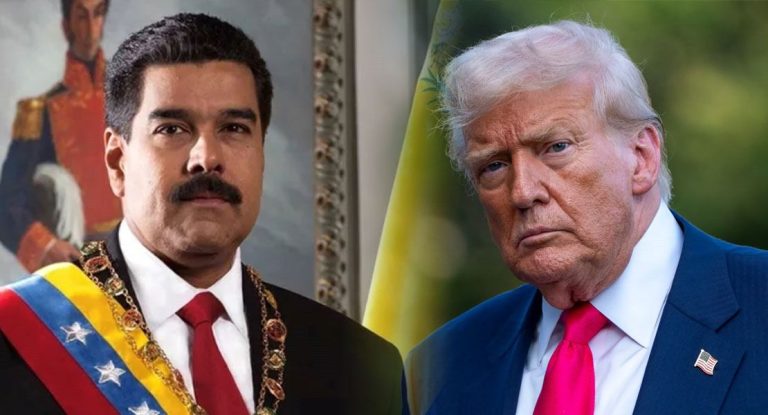
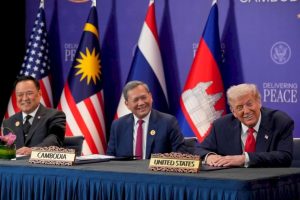
Another populist wave that had an impact, in one way or another, on migration policy shifts in Europe came from the US president Donald Trump. During his first term of office (2017-2021), the American president criticized Merkel’s government for its open-door policy, calling it “a catastrophic mistake”. He argued that receiving such large numbers of migrants had an adverse effect on the European identity and security.[lxxi] As for his current administration, Trump again blamed Merkel for the acceptance of the large numbers of refugees and asylum seekers. In his recent meeting with Merz, he clearly stated that the ongoing migration problem in Germany was not the mistake of the current chancellor, however, Merkel was the responsible.[lxxii] Therefore, we can say that the polarized context in Europe and the US over the past years induced a nationalist agenda that called for a “Fortress Europe” and more restrictive migration policies.
Third: Implications of stricter policy shifts on migration patterns
From what discussed earlier, it can be argued that the unprecedented rise of the far-right party in Germany (AFD), during the last general elections, could open the door for a landslide victory in the forthcoming elections of 2029, potentially forming the next German government. And if this occurred, it could cause a fundamental shift towards stricter migration policies.
Such shifts could trigger more deportations to third countries. This was evident when Scholz asked the Nigerian government to take in rejected asylum seekers.[lxxiii] Also, Merz seemed supportive of the deportation policies, willing to adhere to the same discourse. He was very welcoming to adopt the U.K.’s Rwanda scheme to the German setting by sending migrants to third countries and moving the entire asylum application process outside the EU.[lxxiv] In this context, one could say that implementing these policies directly conform with the far-right narrative, which if continued to be promoted, this would imply a closed-door policy as with the current government, Syrians are being encouraged to make the voluntary decision to leave for their home country. Since then, the government has been considering asylum for certain cases, while ceasing asylum requests for others.[lxxv]
The shift towards these tougher policies could discourage the majority of migrants from seeking asylum in Germany and to search for other alternatives across Europe or elsewhere. This could have its direct effect on the demographic structure of Germany, where the population growth will tend to decline. In 2023, it was reported that the inflow of migrants counterbalanced the effects of Germanys’s low fertility and ageing population, resulting in an increase of 300,000 inhabitants and raising the total population to a historic high of 84.7 million.[lxxvi]
In 2023, the employment level of migrants (not including those from Ukraine, Syria, Iraq, Iran, Afghanistan and Pakistan) reached 75%, compared to 77% for the general population. And since Germany has received more migrants compared to other EU states, the employment rate of migrants attained 70% in 2023 as opposed to the EU average of 66%.
Between 2005 and 2023, there was an upward shift in the number of those working in Germany, reaching 6.1 million. Such growth in the employment rates is explained by the integration of individuals with migrant background into the labor market, amounting to 6.3 million additional workers, corresponding to a 116% rise in employment. One could argue that the integration of foreign workers burdens the state’s budget, however in return, it becomes more evident that investing in these integration programs yields long-term socioeconomic benefits.[lxxvii]
Conclusion
Overall, it can be argued that the existing migration approach should not be considered as novel phenomenon, but rather a gradual continuation of tougher migration policies, manifested since Merkel’s handling of the migration influx in 2015. These different migration measures could be explained in terms of the different levels of analysis; the individual, the state and the regional and international levels.
German Leaders’ stances on migration were shaped by their differing ideologies and strategic interests. And when it comes to the domestic level, one cannot ignore the impact of having a strong anti-immigration sentiment from the public, a major driver for searching for another political alternative that reflects the citizens’ needs. Such political and societal divisions paved the road for the far-right populist party the AFD to gain more support and achieve more political gains. Besides, the regional and international contexts are witnessing a strong wave of populist leaders with anti-migration rhetorics.
This is indeed a pivotal moment in Germany’s history, where more shifts could be witnessed in the migration policies, especially with the AFD party, becoming the second biggest political player in Germany’s parliament after years of exclusion. Now, it seems that other traditional parties will have to work with the AFD and cooperate with each other. Finally, it should be taken into consideration the possible political, economic and social implications of these tougher policies on Germany.
This could lead us to ask the following questions: Could Germany shift completely to a closed-door policy? Could we witness a Fortress Germany applied in reality?
[i] “Number of Refugees to Europe Surges to Record 1.3 Million in 2015,” Pew Research Center, 02 August, 2016, https://www.pewresearch.org/global/2016/08/02/number-of-refugees-to-europe-surges-to-record-1-3-million-in-2015/
[ii] Maïa de La Baume, “Angela Merkel defends open border migration policy,” Politico, 27 August, 2017, https://www.politico.eu/article/angela-merkel-defends-open-border-migration-refugee-policy-germany/
[iii] “Migrant crisis: Migration to Europe explained in seven charts,” BBC, 04 March, 2016, https://www.bbc.com/news/world-europe-34131911?
[iv] “Number of Refugees to Europe Surges to Record 1.3 Million in 2015,” Pew Research Center, 02 August, 2016, https://www.pewresearch.org/global/2016/08/02/number-of-refugees-to-europe-surges-to-record-1-3-million-in-2015/
[v] “Angela Merkel – her political career in pictures,” Deutschland, 17 July, 2024, https://www.deutschland.de/en/topic/politics/angela-merkel-governs-germany-16-years-as-chancellor
[vi] Elsa Conesa, “How Germany, once a model for welcoming refugees, switched to border control,” Le Monde, 17 October, 2024, https://www.lemonde.fr/en/international/article/2024/10/17/how-germany-once-a-model-for-welcoming-refugees-switched-to-border-control_6729611_4.html?
[vii] Daniel Trilling, “How the refugee crisis created two myths of Angela Merkel,” The Guardian, 21 September, 2021, https://www.theguardian.com/world/commentisfree/2021/sep/21/refugee-crisis-two-myths-angela-merkel?
[viii] Zhongqi Niu, Wenlong Song, Yantong Lu, and Xingyu Bao, “Merkel Government’s Refugee Policy: Under Bounded Rationality”, Social Sciences 12, no. 3 (2023): 13-14. https://doi.org/10.3390/socsci12030187
[ix] “CSU denounces Merkel’s refugee policy,” DW, 11 September, 2015, https://www.dw.com/en/csu-denounces-merkels-refugee-policy-as-a-mistake/a-18708181?
[x] Elsa Conesa, “How Germany, once a model for welcoming refugees, switched to border control,” Le Monde, 17 October, 2024, https://www.lemonde.fr/en/international/article/2024/10/17/how-germany-once-a-model-for-welcoming-refugees-switched-to-border-control_6729611_4.html?
[xi] Judith Vonberg, “Why Angela Merkel is no longer the ‘refugee chancellor’, ”CNN, 06 July, 2018, https://edition.cnn.com/2018/07/06/europe/angela-merkel-migration-germany-intl?
[xii] Judith Vonberg, “Why Angela Merkel is no longer the ‘refugee chancellor’,”CNN, 06 July, 2018, https://edition.cnn.com/2018/07/06/europe/angela-merkel-migration-germany-intl?
[xiii] Philip Oltermann, “How Angela Merkel’s great migrant gamble paid off,” The Guardian, 30 August, 2020, https://www.theguardian.com/world/2020/aug/30/angela-merkel-great-migrant-gamble-paid-off
[xiv] Zhongqi Niu, Wenlong Song, Yantong Lu, and Xingyu Bao, “Merkel Government’s Refugee Policy: Under Bounded Rationality”, Social Sciences 12, no. 3 (2023): 9-10. https://doi.org/10.3390/socsci12030187
[xv] Judith Vonberg, “Why Angela Merkel is no longer the ‘refugee chancellor’, ”CNN, 06 July, 2018, https://edition.cnn.com/2018/07/06/europe/angela-merkel-migration-germany-intl?
[xvi] Marion MacGregor, “What is the difference between refugee status and subsidiary protection?,” Info Migrants, 19 June, 2021, https://www.infomigrants.net/en/post/33060/what-is-the-difference-between-refugee-status-and-subsidiary-protection
[xvii] Judith Vonberg, “Why Angela Merkel is no longer the ‘refugee chancellor’, ”CNN, 06 July, 2018, https://edition.cnn.com/2018/07/06/europe/angela-merkel-migration-germany-intl?
[xviii] Judith Vonberg, “Why Angela Merkel is no longer the ‘refugee chancellor’,” CNN, 06 July, 2018, https://edition.cnn.com/2018/07/06/europe/angela-merkel-migration-germany-intl?
[xix] Philip Oltermann, “How Angela Merkel’s great migrant gamble paid off,” The Guardian, 30 August, 2020, https://www.theguardian.com/world/2020/aug/30/angela-merkel-great-migrant-gamble-paid-off
[xx] “German efforts to deport North Africans thwarted by upper house,” Reuters, 10 March, 2017, https://www.reuters.com/article/world/german-efforts-to-deport-north-africans-thwarted-by-upper-house-idUSKBN16H1U3/
[xxi] Miłosława Fijałkowska, “Germany’s Migration Policy Correction: Distancing from Extreme Proposals,” The Polish Institute of International Affaires 966, no. 26 (2017), https://pism.pl/publications/Germany_s_Migration_Policy_Correction__Distancing_from_Extreme_Proposals?
[xxii] “Olaf Scholz: Who is Germany’s new chancellor?,” BBC, 08 December, 2021, https://www.bbc.com/news/world-europe-53735728
[xxiii] Victoria Rietig, “The Political Economy of Migration Policies in Germany,” Foundation for European Progressive Studies (2023),https://dgap.org/en/research/publications/political-economy-migration-policies-germany
[xxiv] Tunay Altay, Gökce Yurdakul, and Naika Foroutan, “Undoing one-dimensionality: reforming German citizenship through the post migrant framework,” Comparative Migration Studies 13, no. 29 (2025), https://doi.org/10.1186/s40878-025-00444-0
[xxv] Maziar Motamedi, “Why is Germany imposing more restrictions on its borders?,” ALJAZEERA, 10 September, 2024, https://www.aljazeera.com/news/2024/9/10/why-is-germany-imposing-more-restrictions-on-its-borders?
See Also: “Organizing and Controlling Migration on Entry Level,” Federal Government of Germany, 18 January, 2024, https://www.bundesregierung.de/breg-de/service/archiv-bundesregierung/organising-and-controlling-migration-2254050
[xxvi] Natasha Mellersh, “Germany’s migration policy: Balancing labor needs and deportation,” Info Migrants, 01 October, 2024, https://www.infomigrants.net/en/post/60287/germanys-migration-policy-balancing-labor-needs-and-deportation
[xxvii] Lucy Kinski, and Simon D. Brause, “Germany: Political Developments and Data in 2024,” European Journal of Political Research Political Data Yearbook, 18 (2025), https://ejpr.onlinelibrary.wiley.com/doi/full/10.1111/2047-8852.70016
[xxviii] Damien McGuinness, “Germany’s one million Syrians at centre of fierce debate over their future,” BBC, 11 December, 2024, https://www.bbc.com/news/articles/cy7kxn6p878o
See Also: Nik Martin, “As Europe needs workers, Syrians face push to return,” DW, 16 December, 2024, https://www.dw.com/en/as-europe-needs-workers-syrians-face-push-to-return/a-71046852
[xxix]“Organizing and Controlling Migration on Entry Level,” Federal Government of Germany, 18 January, 2024, https://www.bundesregierung.de/breg-de/service/archiv-bundesregierung/organising-and-controlling-migration-2254050
[xxx] “Germany seeks Nigeria energy and migration partnerships,” DW, 30 October, 2023, https://www.dw.com/en/germany-seeks-nigeria-energy-and-migration-partnerships/a-67253189
See Also: Kola Tella, “German Chancellor Scholz visits Nigeria, Ghana,” The African Courier, 28 October, 2023, https://www.theafricancourier.de/german-chancellor-scholz-visits-nigeria/
[xxxi] Christiane Fröhlich, “Migration as Crisis? German Migration Discourse at Critical Points of Nation-Building,” American Behavioral Scientist 69, no. 6 (2025): 692, https://journals.sagepub.com/doi/epub/10.1177/00027642231182886
[xxxii] “Responsibility for Germany,” Federal Government of Germany, 14 May, 2025, https://www.bundesregierung.de/breg-en/news/first-government-statement-chancellor-merz-2347710
[xxxiii] Christoph Strack, and Rina Goldenberg, “Who is Friedrich Merz, Germany’s likely next chancellor?,” DW, 09 April, 2025, https://www.dw.com/en/german-election-2025-cdu-friedrich-merz-angela-merkel-chancellor-business-v3/a-70845544
[xxxiv] “Responsibility for Germany,” Federal Government of Germany, 14 May, 2025, https://www.bundesregierung.de/breg-en/news/first-government-statement-chancellor-merz-2347710
See Also: Ayhan Şimşek, “Germany’s Merz announces tougher migration policy in coalition deal,”Anadolu Agency, 09 April, 2025, https://www.aa.com.tr/en/europe/germanys-merz-announces-tougher-migration-policy-in-coalition-deal/3533055?
[xxxv] Ayhan Şimşek, “Germany’s Merz announces tougher migration policy in coalition deal,”Anadolu Agency, 09 April, 2025, https://www.aa.com.tr/en/europe/germanys-merz-announces-tougher-migration-policy-in-coalition-deal/3533055?
[xxxvi] Chris Lunday, “Merz vows migration crackdown on Day 1 as German chancellor,”Politico, 23 January, 2025, https://www.politico.eu/article/germany-friedrich-merz-cdu-migration-crackdown-day-one-chancellor/
[xxxvii] Paul Kirby, and Kristina Volk, “German politics froze out the far right for years – is this about to change?,”BBC, 25 February, 2025, https://www.bbc.com/news/articles/cy9dl4drr8lo
[xxxviii] Geir Moulson, “A far-right party saw a historic surge in support in Germany’s election. Here’s what to know,” Associated Press, 24 February, 2025, https://apnews.com/article/germany-far-right-afd-election-migration-weidel-53ed34f57556ad394c53868726d47194
See Also: Katja Hoyer, “Germany has swung to the right. What does that mean for the country – and Europe? Our panel responds,” The Guardian, 24 February, 2025, https://www.theguardian.com/commentisfree/2025/feb/24/germany-election-results-swung-right-europe-panel-friedrich-merz-afd
[xxxix] Julian Lanchès, “From Radicalisation to Designation: The AfD’s Extremist Turn,” The International Centre for Counter-Terrorism, 13 June, 2025, https://icct.nl/publication/radicalisation-designation-afds-extremist-turn
[xl] Paul Kirby, and Kristina Volk, “German politics froze out the far right for years – is this about to change?,”BBC, 25 February, 2025, https://www.bbc.com/news/articles/cy9dl4drr8lo
See Also: [xl] Kate Connolly, “Olaf Scholz attacks rival’s ‘unforgivable mistake’ as AfD backs migration plan,” The Guardian, 29 January, 2025, https://www.theguardian.com/world/2025/jan/29/german-immigration-motion-passes-breaking-taboo-on-cooperation-with-afd?
[xli] Kate Connolly, “Olaf Scholz attacks rival’s ‘unforgivable mistake’ as AfD backs migration plan,” The Guardian, 29 January, 2025, https://www.theguardian.com/world/2025/jan/29/german-immigration-motion-passes-breaking-taboo-on-cooperation-with-afd?
See Also:
Geir Moulson, “German parliament backs election front-runner’s call for tough border rules with far-right support,” Associated Press, 29 January, 2025, https://apnews.com/article/germany-merz-scholz-election-migration-far-right-da12c67a1eaa66301d38be03e49f4136
Katja Hoyer, “Germany has swung to the right. What does that mean for the country – and Europe? Our panel responds,” The Guardian, 24 February, 2025, https://www.theguardian.com/commentisfree/2025/feb/24/germany-election-results-swung-right-europe-panel-friedrich-merz-afd
[xlii] Jon Henley, “Western Europeans say immigration is too high and poorly managed, survey finds,” The Guardian, 26 February, 2025, https://www.theguardian.com/uk-news/2025/feb/26/western-europeans-say-immigration-is-too-high-and-poorly-managed-survey-finds?
[xliii] “Germany announces the deportations of 81 Afghan men convicted of crimes,” Le Monde, 18 July, 2025, https://www.lemonde.fr/en/international/article/2025/07/18/germany-announces-the-deportations-of-81-afghan-men-convicted-of-crimes_6743491_4.html
[xliv] Elizabeth Schumacher, “German parliament votes to get rid of fast-track citizenship,” DW, 08 October, 2025, https://www.dw.com/en/german-parliament-votes-to-get-rid-of-fast-track-citizenship/a-74272590
[xlv] Jens Thurau, “Merz says Europeans fear ‘public spaces’ due to migration,” DW, 23 October, 2025, https://www.dw.com/en/germany-merz-immigration-cities-migration-criminality-afd/a-74464907
[xlvi] Philip Oltermann, “How Angela Merkel’s great migrant gamble paid off,” The Guardian, 30 August, 2020, https://www.theguardian.com/world/2020/aug/30/angela-merkel-great-migrant-gamble-paid-off
See Also: “Germany’s Merkel on 2015 migrant influx: ‘we managed it,” Associated Press, 08 November, 2021, https://apnews.com/article/europe-germany-migration-angela-merkel-97946524737de3685bd5a558acca4e23?
[xlvii] “ Country Reports on Terrorism 2023: Germany,” U.S. Department of State, https://www.state.gov/reports/country-reports-on-terrorism-2023/germany/#:~:text=2023%20Terrorist%20Incidents%3A%20German%20authorities,death%20and%20four%20severe%20injuries.
[xlviii] Lucy Clarke-Billings, and Jessica Parker, “German police arrest boy accused of knowing about knife attack in advance,” BBC,24 August, 2024, https://www.bbc.com/news/articles/cd73292p1vpo
[xlix] Jacqueline Howard, “Nine-year-old among five killed in attack on German Christmas market,” BBC, 21 December, 2024, https://www.bbc.com/news/articles/cdr0zx4e04no
[l] Jon Henley, “Western Europeans say immigration is too high and poorly managed, survey finds,” The Guardian, 26 February, 2025, https://www.theguardian.com/uk-news/2025/feb/26/western-europeans-say-immigration-is-too-high-and-poorly-managed-survey-finds?utm_source=chatgpt.com
[li] Thomas Wieder, “Germany’s AfD, a far-right party born 10 years ago now aspiring to govern,”Le Monde, 14 February, 2023, https://www.lemonde.fr/en/international/article/2023/02/14/germany-the-afd-a-far-right-party-born-10-years-ago-now-aspires-to-govern_6015659_4.html
[lii] Nicole Monette, “How Germany’s AfD Became a Political Powerhouse,” Geopolitical Monitor, 17 June, 2025, https://www.geopoliticalmonitor.com/how-germanys-afd-became-a-political-powerhouse/
See Also:
Geir Moulson, “A far-right party saw a historic surge in support in Germany’s election. Here’s what to know,” Associated Press, 24 February, 2025, https://apnews.com/article/germany-far-right-afd-election-migration-weidel-53ed34f57556ad394c53868726d47194
Paul Kirby, “Five key takeaways from the German election,” BBC, 24 February, 2025, https://www.bbc.com/news/articles/cx29wlje6dno
Evan Flynn, “Explaining the Rise of the Alternative für Deutschland (AfD),” Vanguard Think Tank, https://vanguardthinktank.org/explaining-the-rise-of-the-alternative-fr-deutschland-afd
[liii] Kristin Zeier, and Gianna-Carina Grün, “German election results explained in graphics,” DW,27 February, 2025, https://www.dw.com/en/german-election-results-explained-in-graphics/a-71724186
See Also: Paul Kirby, “Five key takeaways from the German election,” BBC, 24 February, 2025, https://www.bbc.com/news/articles/cx29wlje6dno
[liv] Geir Moulson, “A far-right party saw a historic surge in support in Germany’s election. Here’s what to know,” Associated Press, 24 February, 2025, https://apnews.com/article/germany-far-right-afd-election-migration-weidel-53ed34f57556ad394c53868726d47194
[lv] Evan Flynn, “Explaining the Rise of the Alternative für Deutschland (AfD),” Vanguard Think Tank, https://vanguardthinktank.org/explaining-the-rise-of-the-alternative-fr-deutschland-afd
[lvi] Jon Henley, “Western Europeans say immigration is too high and poorly managed, survey finds,” The Guardian, 26 February, 2025, https://www.theguardian.com/uk-news/2025/feb/26/western-europeans-say-immigration-is-too-high-and-poorly-managed-survey-finds?
[lvii] Miłosława Fijałkowska, “Germany’s Migration Policy Correction: Distancing from Extreme Proposals,” The Polish Institute of International Affaires, no. 26 (966) (2017), https://pism.pl/publications/Germany_s_Migration_Policy_Correction__Distancing_from_Extreme_Proposals?
[lviii] Nicole Monette, “How Germany’s AfD Became a Political Powerhouse,” Geopolitical Monitor, 17 June, 2025, https://www.geopoliticalmonitor.com/how-germanys-afd-became-a-political-powerhouse/
[lix] Evan Flynn, “Explaining the Rise of the Alternative für Deutschland (AfD),” Vanguard Think Tank, https://vanguardthinktank.org/explaining-the-rise-of-the-alternative-fr-deutschland-afd
See Also: Geir Moulson, “A far-right party saw a historic surge in support in Germany’s election. Here’s what to know,” Associated Press, 24 February, 2025, https://apnews.com/article/germany-far-right-afd-election-migration-weidel-53ed34f57556ad394c53868726d47194
[lx] Evan Flynn, “Explaining the Rise of the Alternative für Deutschland (AfD),” Vanguard Think Tank, https://vanguardthinktank.org/explaining-the-rise-of-the-alternative-fr-deutschland-afd
[lxi] Daniel Trilling, “How the refugee crisis created two myths of Angela Merkel,” The Guardian, 21 September, 2021, https://www.theguardian.com/world/commentisfree/2021/sep/21/refugee-crisis-two-myths-angela-merkel?
[lxii] Zhongqi Niu, Wenlong Song, Yantong Lu, and Xingyu Bao, “Merkel Government’s Refugee Policy: Under Bounded Rationality”, Social Sciences 12, no.3 (2023): 17, https://doi.org/10.3390/socsci12030187
[lxiii] Markus Rheindorf, Bastian Vollmer, “The impact of narratives on policy-making at the national level: The case of Germany”, Barcelona Centre for International Affairs(2023): 14. https://www.cidob.org/en/publications/impact-narratives-policy-making-national-level-case-germany
[lxiv] Miłosława Fijałkowska, “Germany’s Migration Policy Correction: Distancing from Extreme Proposals,” The Polish Institute of International Affaires, no. 26 (966) (2017), https://pism.pl/publications/Germany_s_Migration_Policy_Correction__Distancing_from_Extreme_Proposals?
[lxv] Zhongqi Niu, Wenlong Song, Yantong Lu, and Xingyu Bao, “Merkel Government’s Refugee Policy: Under Bounded Rationality”, Social Sciences 12, no. 3 (2023): 17-18. https://doi.org/10.3390/socsci12030187
[lxvi] Daniel Trilling, “How the refugee crisis created two myths of Angela Merkel,” The Guardian, 21 September, 2021, https://www.theguardian.com/world/commentisfree/2021/sep/21/refugee-crisis-two-myths-angela-merkel?
[lxvii] Armida van Rij, Tim Benton, Creon Butler, and Patrick Schröder, “How will gains by the far right affect the European Parliament and EU?”, Chatham House , 11 June, 2024, https://www.chathamhouse.org/2024/06/how-will-gains-far-right-affect-european-parliament-and-eu
[lxviii] Maïa de La Baume, “Angela Merkel defends open border migration policy,” Politico, 27 August, 2017, https://www.politico.eu/article/angela-merkel-defends-open-border-migration-refugee-policy-germany/
See Also:
Miłosława Fijałkowska, “Germany’s Migration Policy Correction: Distancing from Extreme Proposals,” The Polish Institute of International Affaires, no. 26 (966) (2017), https://pism.pl/publications/Germany_s_Migration_Policy_Correction__Distancing_from_Extreme_Proposals?
Philip Oltermann, “How Angela Merkel’s great migrant gamble paid off,” The Guardian, 30 August, 2020, https://www.theguardian.com/world/2020/aug/30/angela-merkel-great-migrant-gamble-paid-off
[lxix] Jill Lawless, “Online misinformation fueled tensions over the stabbing attack in Britain that killed 3 children”, Associated Press, 01 August, 2024, https://apnews.com/article/uk-southport-stabbing-online-misinformation-1dcd23b803401416ac94ae458e5c9c06
SEE ALSO:
Helen Regan, Niamh Kennedy, Maija Ehlinger, Duarte Mendonca and Radina Gigova, “Violent scenes as far-right protesters ‘hijack’ vigil for 3 girls killed in Southport knife attack”, CNN, 01 August, 2024, https://edition.cnn.com/2024/07/31/uk/southport-stabbing-vigil-violent-protests-intl-hnk
[lxx] Armida van Rij, Tim Benton, Creon Butler, and Patrick Schröder, “How will gains by the far right affect the European Parliament and EU?”, Chatham House , 11 June, 2024, https://www.chathamhouse.org/2024/06/how-will-gains-far-right-affect-european-parliament-and-eu
[lxxi] Daniel Trilling, “How the refugee crisis created two myths of Angela Merkel,” The Guardian, 21 September, 2021, https://www.theguardian.com/world/commentisfree/2021/sep/21/refugee-crisis-two-myths-angela-merkel?
See Also:Evan Flynn, “Explaining the Rise of the Alternative für Deutschland (AfD),” Vanguard Think Tank, https://vanguardthinktank.org/explaining-the-rise-of-the-alternative-fr-deutschland-afd
[lxxii] Kate Connolly,“Trump scorns Merkel legacy during new German chancellor’s White House visit”, The Guardian, 05 June, 2025, https://www.theguardian.com/world/2025/jun/05/trump-scorns-angela-merkel-legacy-during-new-german-chancellors-white-house-visit-friedrich-merz?utm
[lxxiii] Kola Tella, “German Chancellor Scholz visits Nigeria, Ghana,” The African Courier, 28 October, 2023, https://www.theafricancourier.de/german-chancellor-scholz-visits-nigeria/
[lxxiv] Nette Nöstlinger, “Germany is now leading the charge on Europe’s anti-immigration turn,” Politico, 31 July, 2025, https://www.politico.eu/article/germany-is-now-leading-the-charge-on-europes-anti-immigration-turn/
See Also: Evan Easton-Calabria, “UK’s failed asylum deportation plan puts Rwanda’s human rights and refugee struggles in the spotlight,” The Conversation, 24 November, 2023, https://theconversation.com/uks-failed-asylum-deportation-plan-puts-rwandas-human-rights-and-refugee-struggles-in-the-spotlight-218263
[lxxv] Alex Berry, “Germany: 1,300 Syrians return home since fall of Assad,” DW , 13 August, 2025, https://www.dw.com/en/germany-1300-syrians-return-home-since-fall-of-assad/a-73627393
[lxxvi] Paolo Laudani,“ Germany’s working-age population to decline by 2% by 2045, study shows”, Reuters, 19 June, 2024, https://www.reuters.com/world/europe/germanys-working-age-population-decline-by-2-by-2045-study-shows-2024-06-19/?utm
[lxxvii] Herbert Brücker,“ Drivers of employment growth: An overview of the integration of migrants into the German labour market”, The Magazine of the Institute for Employment Research, 31 July, 2025, https://iab-forum.de/en/drivers-of-employment-growth-an-overview-of-the-integration-of-migrants-into-the-german-labour-market/?utm